English
  Polish

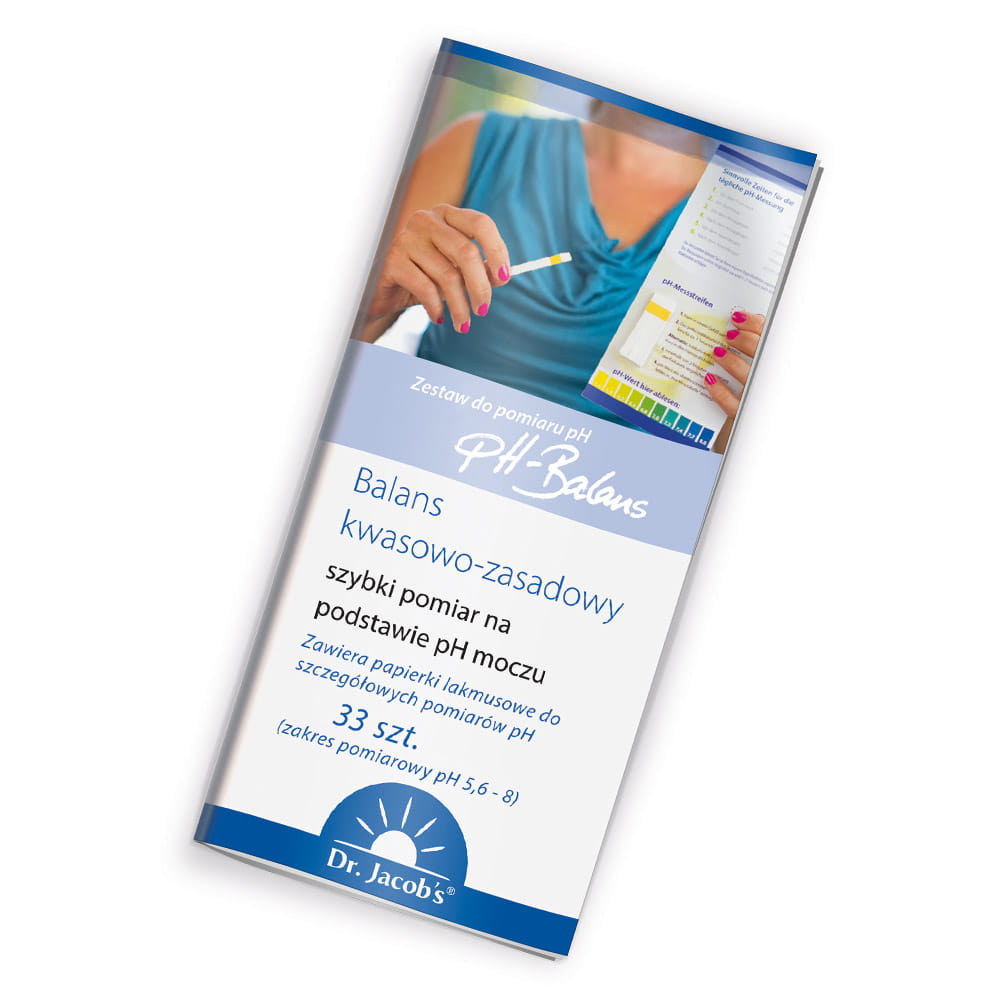
Litmus test papers 33 pcs. PH Test
€6.99
Litmus test papers 33 pcs.
urine pH analysis
The pH measurement scale is 5,6-8,0. Accuracy up to 0.2 degrees pH.
Brochure of 30. paper with pH scale, tables for drawing results,
examples of interpretations and instructions.
1 in stock
Description
Thanks to Dr. Jacob's Litmus Tests you can easily determine the state of the body's acid-base balance (acidification, balance, alkalosis), saturation of the body with alkaline minerals, as well as the overall performance of the kidneys and liver. You will do this with a simple and unobtrusive urine pH test.
Measurement accuracy
The pH scale has values from 0 to 14. pH 0 is the acidic pole, pH 7 is the neutral pole, pH 14 is the alkaline pole. pH is an exponential scale, which means that each value is multiplied by 10 on each unit. For example: pH 6 is 10 times more acidic than pH 7, and pH 5 is already 100 times more acidic than pH 7. In other words, what may seem like just a small change in pH is actually extremely important. Therefore, when purchasing litmus papers, you should pay attention to the accuracy with which they measure pH. Papers that measure the exact pH value are not suitable for measuring the pH value of urine.
The accuracy of litmus tests is even more important when analyzing the pH of urine, since it varies between pH 5.6 and 7.5. Dr. Jacob's litmus tests check the pH with an accuracy of approx. 0.2 degrees pH .Using them, you can notice even small fluctuations in pH during the day. For example: on Dr. Jacob's Litmus Tests you can read the values: 5,6; 5,9; 6,2; 6,5; 6,8; 7,0; 7,2; 7,4. Papers measuring to within one degree of pH only show a value of 6 or 7.
Acid-base balance study
The pH of urine changes its values during the day, and this is completely normal. Therefore, a single measurement is not sufficient. A few random measurements will also not show the full picture and may be misleading – you may come to the wrong conclusion that there is acidification or alkalosis.
Therefore, measurements should be made several times a day for at least a week. Note the measurement values in the table, and then draw a graph that should be compared with the graph of the correct values.
Related products
-
- Sale!
Dary Natury Ziele Macierzanki 50 g najlepiej zużyć przed końcem 10.2026
- Original price was: €4.50.€2.99Current price is: €2.99.
- Add to cart
-
- Out of Stock
Gifts of Nature dandelion leaf 25 g
- €3.99
- Read more
-